Forensic Evidence Chain-of-Custody Rule
The Secret of SecretsThe Forensic Evidence Chain-of-Custody Rule is the procedural safeguard that preserves the identity, location, handling history, and investigative reliability of physical evidence. In the bus-terminal investigation, it connects Daeshim’s fieldwork as a forensic science technician with Ricky Graham’s documentation, Professor Chapman’s entomological analysis, and the later laboratory testing that may establish whether the death was a homicide and where the body had previously been.
Definition and Professional Setting
The rule operates within Daeshim’s six-year career in the Charlotte-Mecklenburg area in North Carolina. His work includes photographing crime scenes, sketching them, collecting samples, and analyzing those materials in the laboratory for findings that can help detectives solve cases. The procedure is therefore not an abstract legal formality: it is the framework that allows a physical trace to move from a body or crime scene into a defensible investigative conclusion.
Daeshim’s professional commitment is rooted in his early fascination with crime shows and his strength in chemistry and biology. He studied forensic science at North Carolina Central University and prefers the concentrated reasoning of laboratory work to the unpleasantness of collecting evidence from dead bodies. Even so, he regards the work as meaningful because it can identify perpetrators, bring closure to a victim’s family, and sometimes exonerate innocent people. The chain-of-custody rule gives that moral purpose a practical structure by requiring every transfer and examination to remain accountable.
Collection and Documentation at the Terminal
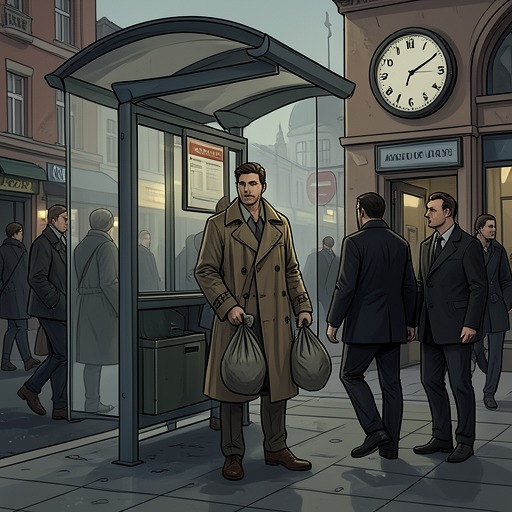
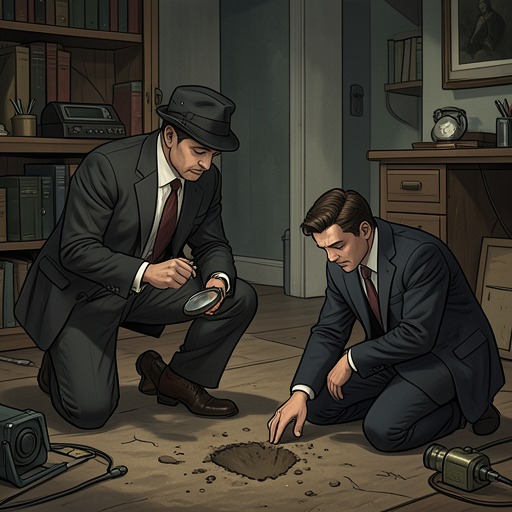
At the rear of the terminal, Daeshim and Ricky encounter a body that appears undisturbed and may have been there for at least a week, although the timing must be established through analysis. Daeshim uses standard blue latex gloves, a bag, and tweezers to collect apparent egg casings, then places them in a plastic bag. He gathers beetles and maggots into separate bags because an entomologist can study the insects to help determine time of death.
Ricky’s role is essential to the same chain. Daeshim passes him the first bag so Ricky can document what was collected and exactly where on the body it was found. The investigators collect multiple samples, photograph the body from every imaginable angle, and return with the materials to the laboratory. Their two hours of fieldwork thus produces not merely objects but documented objects: each sample must retain a traceable relationship to the body, the location, and the person who recovered it.
Back in the laboratory, Daeshim begins with notes and photographs before moving to trace evidence. While the photographs develop, he studies the notes they made at the scene, then catalogs the evidence before testing begins. The sequence emphasizes that interpretation follows preservation. A clue cannot safely carry meaning if its origin, condition, or handling has been left uncertain.
Transfers, Sign-Outs, and the Entomologist
The insect evidence requires another controlled transfer. The egg casings, beetles, and maggots must be given to Professor Chapman, a local university professor who is regularly called in for such occasions. When Daeshim asks whether Ricky has contacted Chapman, Ricky confirms that the professor will collect the material the following morning. Daeshim instructs Ricky to leave the samples beside the clipboard and to ensure that Chapman signs them out if Daeshim is absent.
Daeshim states the purpose directly: they do not want the evidence chain broken. The signature is consequently more than administrative routine. It records the moment responsibility passes from the forensic team to Professor Chapman and protects the continuity between collection and specialized analysis. When Ricky later confirms that Chapman picked up the bugs about an hour earlier, that transfer is treated as completed rather than invisible; the investigation can proceed without losing track of who possessed the material.
The Rule’s Role in Establishing a Homicide
The chain becomes especially important when Ricky returns from the morgue with additional material: grasses and dirt in evidence bags, removed from the victim’s body and clothing. The body was covered in these substances, and Ricky’s discovery raises the possibility that it was moved. Daeshim asks whether the victim was killed somewhere else and transported to the terminal, while Ricky points to pine straw and asks whether a pine tree had been present there. The physical traces therefore challenge the apparent setting of the death.
Before drawing a conclusion, Daeshim confirms that Professor Chapman has collected the insects and then begins work on the soil samples. He prepares a sample for X-Ray Diffraction, or XRD, and for scanning electron microscopy to double-check the findings. If the soil and vegetation support Ricky’s suspicion, the terminal may be a disposal site rather than the original crime scene, and the case may be treated as homicide. The rule’s value lies in enabling that inference without severing the evidence from its documented history.
The testing may take most of a day or even several days. While the instruments run, Daeshim carefully reviews the notes and photographs to make sure nothing else has been missed. The investigation advances through a chain of small, accountable acts: recovery, separation into bags, location records, photographs, cataloging, formal transfer, and laboratory comparison. Each step narrows the distance between a disturbing physical fact and a conclusion detectives can use.
Investigative and Narrative Significance
The Forensic Evidence Chain-of-Custody Rule makes scientific credibility part of the suspense. The body’s insects can suggest time of death; soil, grasses, and pine straw can suggest movement; XRD and scanning electron microscopy can test that suggestion. None of these clues is allowed to become decisive merely because it seems persuasive. Their force depends on careful collection, clear documentation, and an unbroken account of custody.
The procedure also contrasts Daeshim’s private regret with the discipline of his professional life. His thoughts about Nyia and the eight years of separation pull him toward unresolved personal history, but the laboratory requires attention to sequence, detail, and proof. In that setting, responsibility is expressed through handling: gloves, separate bags, photographs, notes, a clipboard, and a required signature. The rule therefore supports both the mystery’s logic and Daeshim’s characterization, presenting him as someone who seeks closure through evidence while knowing that closure is only trustworthy when every link in the chain remains intact.